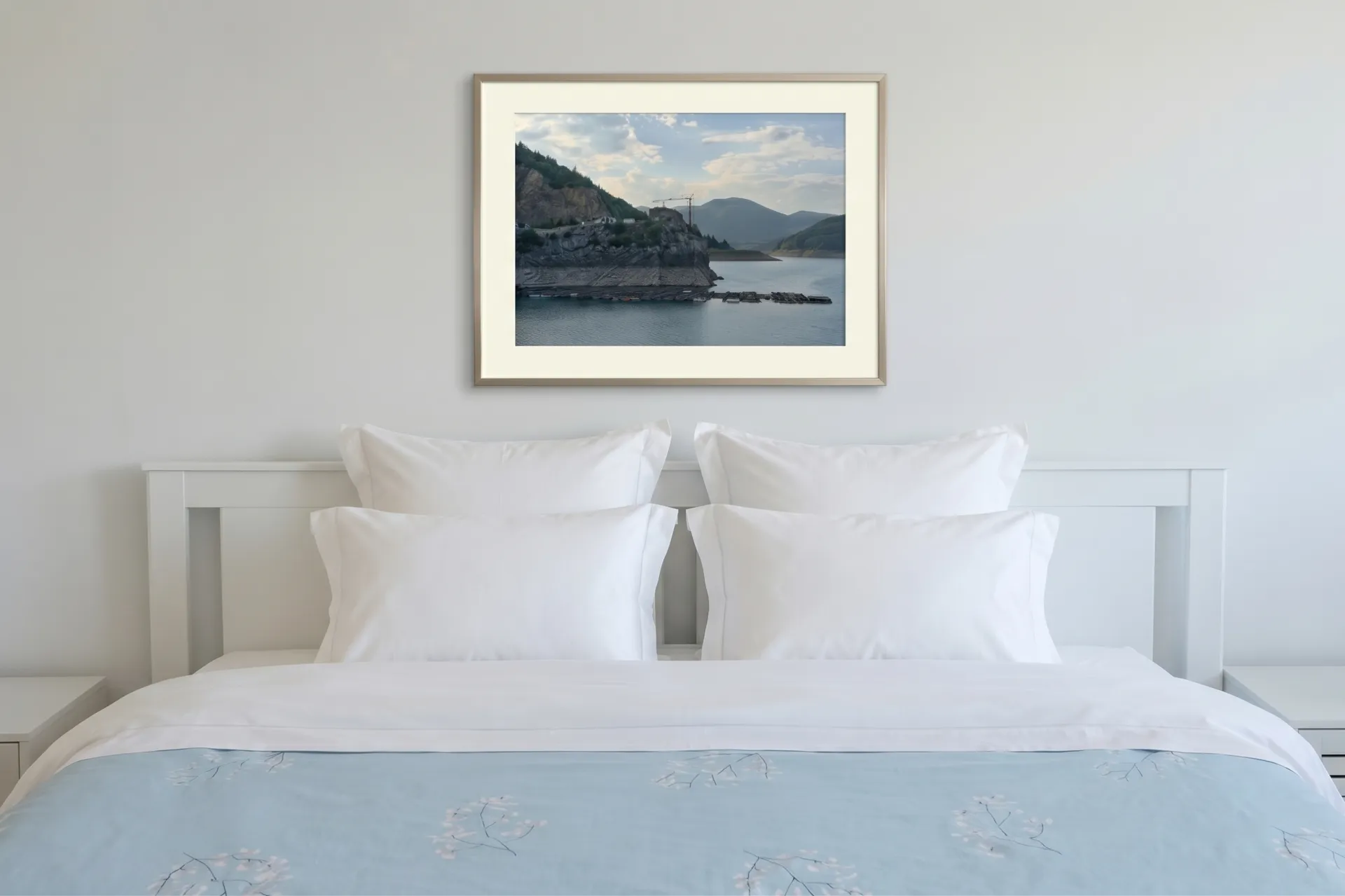
How to Choose the Right Size and Frame for Your Poster: A Step-by-Step Guide
28 September 2026
An author's photograph on the wall can set the overall mood of a space: conveying the morning silence of mountain fog, the dynamics of old European streets, or the meditative calm of a river's surface. However, the visual effect depends not only on the shot itself but also on its scale and presentation.
Each artwork in our gallery is versatile: you can order your favorite shot either as a ready-made physical print (A4, A3, or A2) or as a high-resolution digital file.
Below is a practical guide to help you determine the right size and choose a suitable frame for it.
1. Choosing the Size: A4, A3, or A2?
To ensure your poster looks organic, consider its size in relation to the wall area and the distance from which it will be viewed.
| Format | Exact Dimensions (cm) | Where to Place in the Interior | Optimal Viewing Distance |
| A4 | 21 × 29.7 cm | Gallery wall (grid of several frames), desk, bookshelf, narrow wall section | Up to 1–1.5 m |
| A3 | 29.7 × 42 cm | Bedroom, study, hallway, paired compositions (diptychs) above a dresser or desk | 1.5–2.5 m |
| A2 | 42 × 59.4 cm | Main accent above a sofa, bed, or dining area | From 2.5 m |
A4 (21 × 29.7 cm): Intimate and Serial
The size of a standard portrait-oriented sheet. It rarely stands alone on a large wall but is indispensable for combinations.
How to Use: Combine several shots on the same theme. For instance, a series of 3–4 architectural details of Venice or textured shots of a mountain lake in identical A4 frames creates a harmonious gallery layout.
Where to Place: Consoles, open shelves, workspace, narrow wall sections between doors and windows.
A3 (29.7 × 42 cm): Balanced and Versatile
An area equivalent to two A4 sheets. The most adaptable size for typical urban apartments.
How to Use: Works excellently in pairs (diptych) or trios (triptych). For example, two panoramic landscapes of Tara National Park or paired shots of a mountain landscape will balance the wall above a headboard or desk.
Where to Place: Bedrooms, hallways, kitchens, relaxation areas.
A2 (42 × 59.4 cm): A Standalone Focal Point
A large format that attracts attention from the first step into the room.
How to Use: Ideal for complex, deep photographs where nuances are important to observe – expansive panoramas of a river, misty mountain ranges, or expressive urban perspectives.
Where to Place: Above a three-seater sofa, in the dining area, or on the central empty wall of the living room.
2. Choosing a Frame to Match the Photo and Interior Style
A frame serves as a visual boundary between the shot and the wall surface. It should not distract from the image's subject.
Frame Materials: Aluminum or Wood
- Thin metal profile (aluminum, 8–12 mm): A minimalist, modern solution. It doesn't visually weigh down even a large A2 format, preserving the sheet's geometry. Suitable for minimalism, Scandinavian style, high-tech, and loft aesthetics.
- Wood (oak, ash, walnut, light pine): Emphasizes the natural elements of the shots. Ideal for landscapes (mountains, forests, lakes) and interiors in eco, Japandi, wabi-sabi, and boho styles.
Color Options: Black, White, or Wood Frame
- Matte black: Creates a sharp, graphic contour. Makes contrasting shots and architectural lines more cohesive and expressive.
- Matte white: Visually lightens the artwork, blends with light walls, and gives the image "air." Suitable for foggy, dawn, or minimalist shots.
- Light natural wood: Highlights the warmth of sunny landscapes and harmonizes with Scandinavian furniture.
3. Why Use a Matboard?
- A matboard is a frame made of thick, acid-free cardboard that surrounds the photograph inside the baguette.
- Focus Enhancement: Wide, neutral borders isolate the frame from the texture or color of the wallpaper.
- Increasing Dimensions: If you like a shot but want to display it in a compact A4 format, using a 5–7 cm wide matboard allows you to place it in an A3 or 30 × 40 cm frame, filling more wall space.
- Print Safety: A matboard creates an air gap between the glass and the paper surface, preventing the ink layer from sticking.
4. Rules for Harmonious Poster Placement on the Wall
- Hanging Height: The central point of the poster (or the center of a group of frames) should be at eye level – approximately 145–152 cm from the floor.
- Width Relative to Furniture: If the poster hangs above a sofa, console, or bed, its width (or the combined width of the frame composition) should be 2/3 to 3/4 of the furniture's width. A single A4 poster above a long sofa will get lost, while an A2 or a pair of A3s will create a well-balanced composition.
- Protection from Fading: For rooms with bright daylight, choose a frame with UV-protective glass or high-quality matte/anti-glare acrylic.
Physical Print or Digital File: What to Choose?
On each photo's page, you can select your preferred format:
A4, A3, A2 Posters: Printed on thick, archival matte paper with deep color reproduction. They strictly adhere to standard sizes, making it easy to find a ready-made frame in stores.
High-Resolution Digital Photo: An original quality file for self-printing. Suitable if you want to print the shot at a non-standard scale, on canvas, foam board, or decorate your interior in another country without waiting for delivery.
Go to the gallery, choose your favorite direction – whether it's the atmospheric views of Serbia, the landscapes of Italy, or the tranquility of mountain ranges – and select the desired size directly on the page of your favorite photograph.